admin
admin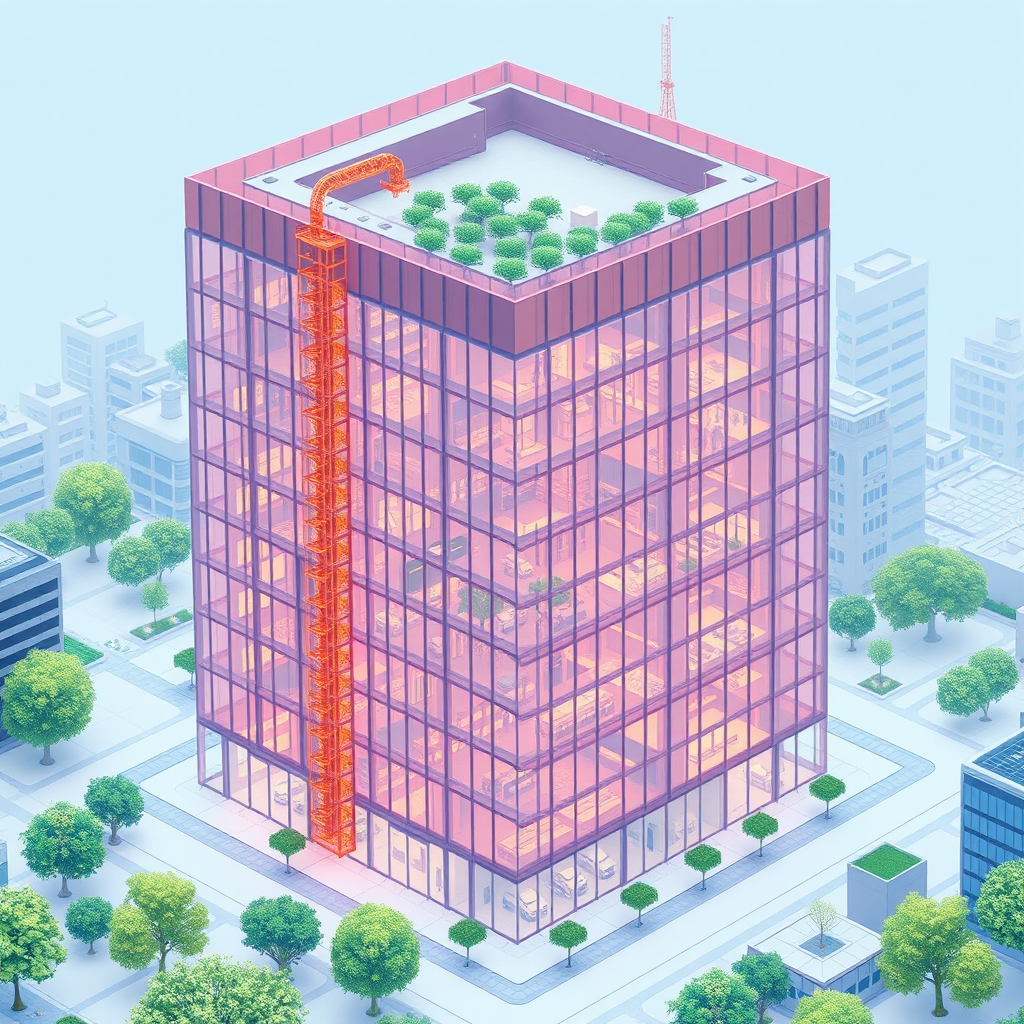
Did you know that the construction and operation of buildings account for nearly 40% of global carbon emissions? For years, AEC professionals have struggled to pinpoint exactly where these emissions originate, often relying on broad estimates rather than precise data. This lack of granularity makes achieving Net Zero targets feel like a guessing game. However, the landscape is changing rapidly. By leveraging digital twin carbon analysis, firms can now integrate Building Information Modeling (BIM) directly with Life Cycle Assessment (LCA) methodologies. This powerful combination exposes hidden carbon hotspots during the design stage, transforming how architects and engineers approach sustainable design.
How Does BIM Integration with LCA Expose Carbon Hotspots?
For decades, calculating a building’s environmental footprint was a manual, siloed process performed late in the design phase—often when changes were too expensive to implement. The new university-backed methodology shifts this paradigm by embedding LCA data directly into the BIM environment. Instead of exporting data to external spreadsheets, the digital twin acts as a living database.
Imagine modeling a steel structure in Revit or ArchiCAD. In the past, you might have estimated the steel quantity. With this integrated approach, the digital twin links specific geometry to precise environmental product declarations (EPDs). It instantly reveals that the structural frame accounts for 35% of the building’s embodied carbon, while the glazing is surprisingly efficient. This visibility allows teams to address the “low-hanging fruit”—or in this case, the heavy emitters—immediately. By visualizing carbon intensity alongside thermal performance, designers can make trade-offs that truly impact the bottom line, reducing modeling rework and saving weeks of calculation time.
Why Is the Design Stage Critical for Carbon Reduction?
A common misconception in the industry is that operational carbon—energy used for heating, cooling, and lighting—is the primary culprit. While significant, embodied carbon (the emissions associated with materials and construction) is locked in the moment the foundation is poured. If you wait until the construction documentation phase to assess this, it is already too late to make meaningful changes.
This research highlights that utilizing a digital twin at the concept and design development stages is essential for prioritizing reduction strategies. For example, an engineer might run a scenario comparing a concrete slab versus a cross-laminated timber (CLT) system. The digital twin instantly updates the total life cycle carbon projection, showing that the CLT option reduces the project’s carbon debt by 20%. This real-time feedback loop transforms the design workflow from a linear process into a circular, investigative one. It empowers project stakeholders to meet rigorous green building standards, such as LEED or BREEAM, without sacrificing aesthetic intent or structural integrity.
What Are the Real-World Benefits of This Methodology?
Beyond the obvious environmental advantages, integrating carbon analysis into your BIM workflow offers tangible economic and efficiency benefits. Clients are increasingly demanding carbon accountability; those who can provide precise, data-backed evidence of sustainability will win the bid. The methodology discussed in the university report proves that a comprehensive, design-stage analysis drastically reduces the risk of “value engineering” later stripping out sustainable features due to budget overruns.
Furthermore, this approach creates a “Single Source of Truth.” When the digital twin is utilized for both performance analysis and carbon quantification, data fragmentation is eliminated. Teams report a significant reduction in coordination errors because material quantities are accurately linked to their environmental impact from day one. This holistic view doesn’t just help the planet; it streamlines project delivery, ensures regulatory compliance, and enhances the firm’s reputation as a leader in high-performance design.
Quick Implementation Tips
* Audit Your Material Libraries: Ensure your BIM families contain accurate data fields for volume, weight, and material type to enable automated carbon calculations.
* Integrate Early-Stage LCA Tools: Connect your digital twin environment with plugins like Tally or One Click LCA to start estimating embodied carbon during schematic design.
* Establish a Carbon Budget: Set a specific carbon target (kgCO2e/m2) at the project kickoff and use the digital twin to track progress against it just like you would with a financial budget.
* Prioritize Structure and Envelope: Focus your initial analysis on the building envelope and structural systems, as these typically represent the largest sources of embodied carbon.
Key Takeaway
Integrating Life Cycle Assessment into BIM transforms a static model into a predictive tool for sustainability. By identifying carbon hotspots early, firms can design smarter, greener buildings that meet the urgent demands of our climate reality.